admin
admin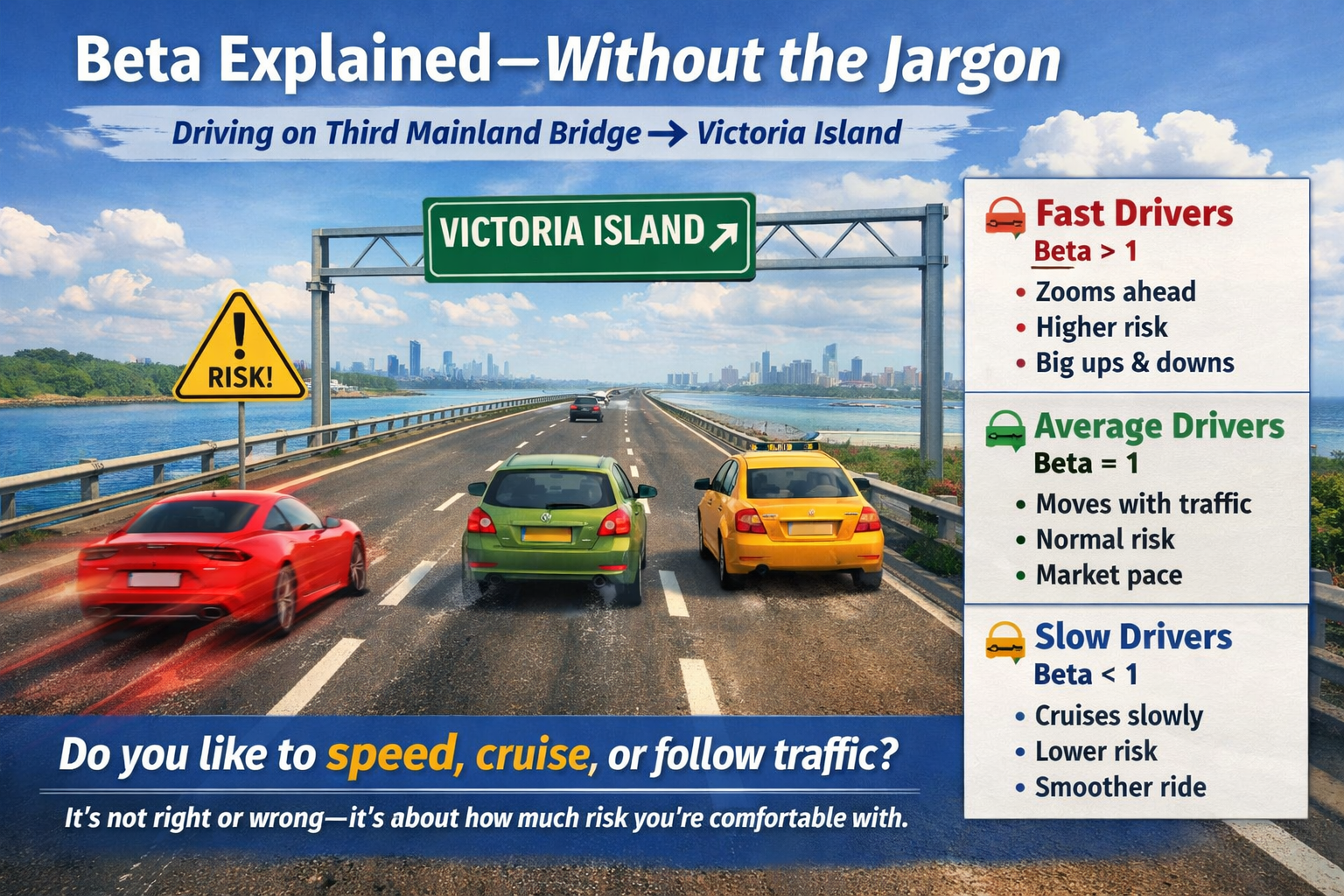

Beta is a key building block of the Capital Asset Pricing Model (CAPM); it measures how risky a stock is relative to the market. Beta is just a way of answering one simple question: “When the market moves up or down, how strongly does this stock react?”
That’s it.
· Beta = 1: the stock moves with the market
· Beta > 1: the stock moves more than the market
· Beta < 1: the stock moves less than the market
The market itself sets the pace. By definition, its beta is 1.
Is this whole thing still technical? Now forget finance, let’s drive
Imagine you’re on Third Mainland Bridge, heading to Victoria Island.
Lots of cars. One long road. Everyone is trying to get to the same place.
Most cars are moving at about the same speed. That speed is the normal speed of the road. That normal speed is the market.
Three types of drivers
1. The fast drivers (fast and furious)
Some cars are speeding ahead, overtaking everyone.
They may arrive earlier, but they are taking more risk. One small mistake and—problem. The lagoon is right there.
👉 These are high-beta stocks
They move faster than the market.
More excitement. More risk. Bigger ups and downs.
2. The slow drivers (slow and steady)
Some cars stay well below the average speed.
They arrive later, but the ride is calm. No drama. Very steady.
👉 These are low-beta stocks
They move less than the market.
Lower risk. Lower swings. Fewer surprises.
3. The average drivers
Most cars just move with traffic.
Not too fast. Not too slow.
👉 This is beta of 1
Moving exactly like the market.
Why beta matters
Beta helps investors answer one everyday question:
“Am I the kind of person who likes to speed, cruise, or just follow traffic?”
And just like driving, none is right or wrong. It simply depends on how much risk you’re comfortable with.